

Why Social Isn’t Social… and Isn’t Working for Us Anymore
I’m part of a unique generation that remembers a time before the internet and came of age with it.
I remember the huge, boxy Gateway computer that sat in our dining room. I was in third grade, playing Barbie Riding Club and Zoo Tycoon after school. I opened Microsoft Word and typed up little stories that I still have physical copies of.
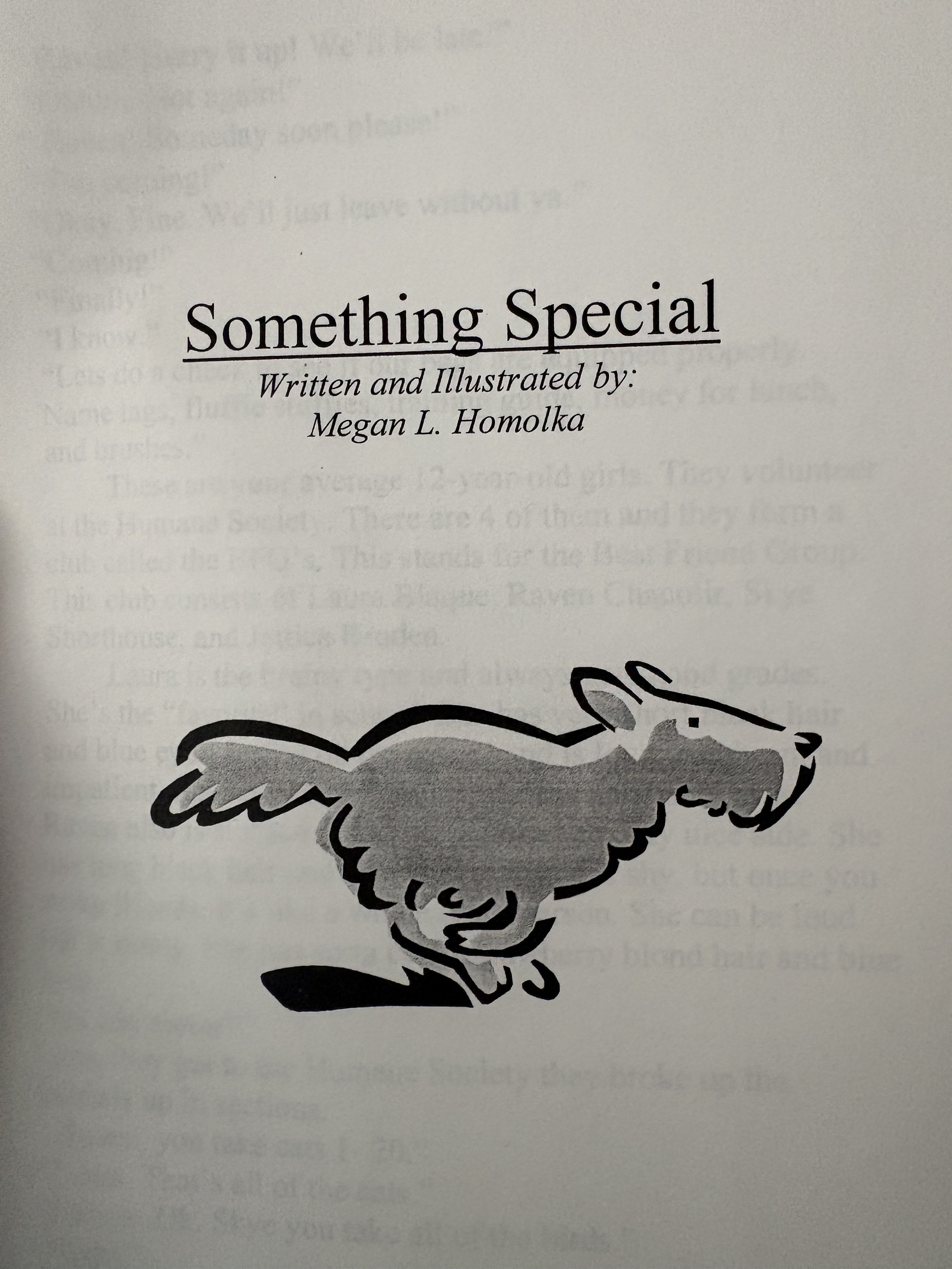
A cover for a “book” I wrote when I was 10 years old. I used Microsoft Word on my parents’ massive Gateway computer. This is a pic of a physical copy of the little stapled-together book that I still have to this day.
I’d click on the little America Online icon, listened to the screeching, beeping and humming of the dial-up, go to nickelodeon.com and take turns with my little sister playing SpongeBob's Jellyfishin' Game and pray that no one called our landline so we wouldn’t get disconnected.
By the time I got to college, everything was changing. Evolving.
I joined Facebook back when you had to have a college email address. It felt exclusive and exciting. I relished making photo albums with 80 blurry pictures of nights out taken with my crappy point-and-shoot camera. I joined Twitter after watching cofounder Evan Williams speak at the journalism school I attended.
I loved being a part of the little communities that grew from Twitter hashtags - I met up with folks in real life who would end up being a part of the rest of my life. (Shoutout #LNK). Hashtags weren’t tools for marketing back then, they were places to connect.
The dawn of social media felt magical to me as an aspiring journalist and writer.
When I graduated, I built a career in digital media. I’ve been in this industry for almost 15 years now. I’ve watched the landscape change from scrappy, chronological feeds to algorithm-driven ecosystems. Community has become measured by metrics. Friends are now reduced to “audiences.”
And somewhere along the way, social stopped being social. It’s become a machine to monetize and line the pockets of folks nobody likes.
Over the last few years, the way we as a society use social media has shifted, and not in small ways. Younger people, especially teens, twenty-somethings and young families, aren’t hanging out on social media like they used to. Time spent scrolling traditional feeds is down. Instead of seeing updates from people you actually know, your feed is packed with algorithm-picked posts from strangers you didn’t ask to follow. I know when I scroll my Facebook feed, one post in five is one from an actual person (and not even someone I’m friends with, but probably a post in a group) - the rest are advertisements.
Engagement is a different animal. Organic reach (how many people see your post without you paying for it) has dropped steadily - and will probably continue to do so across Meta products specifically.
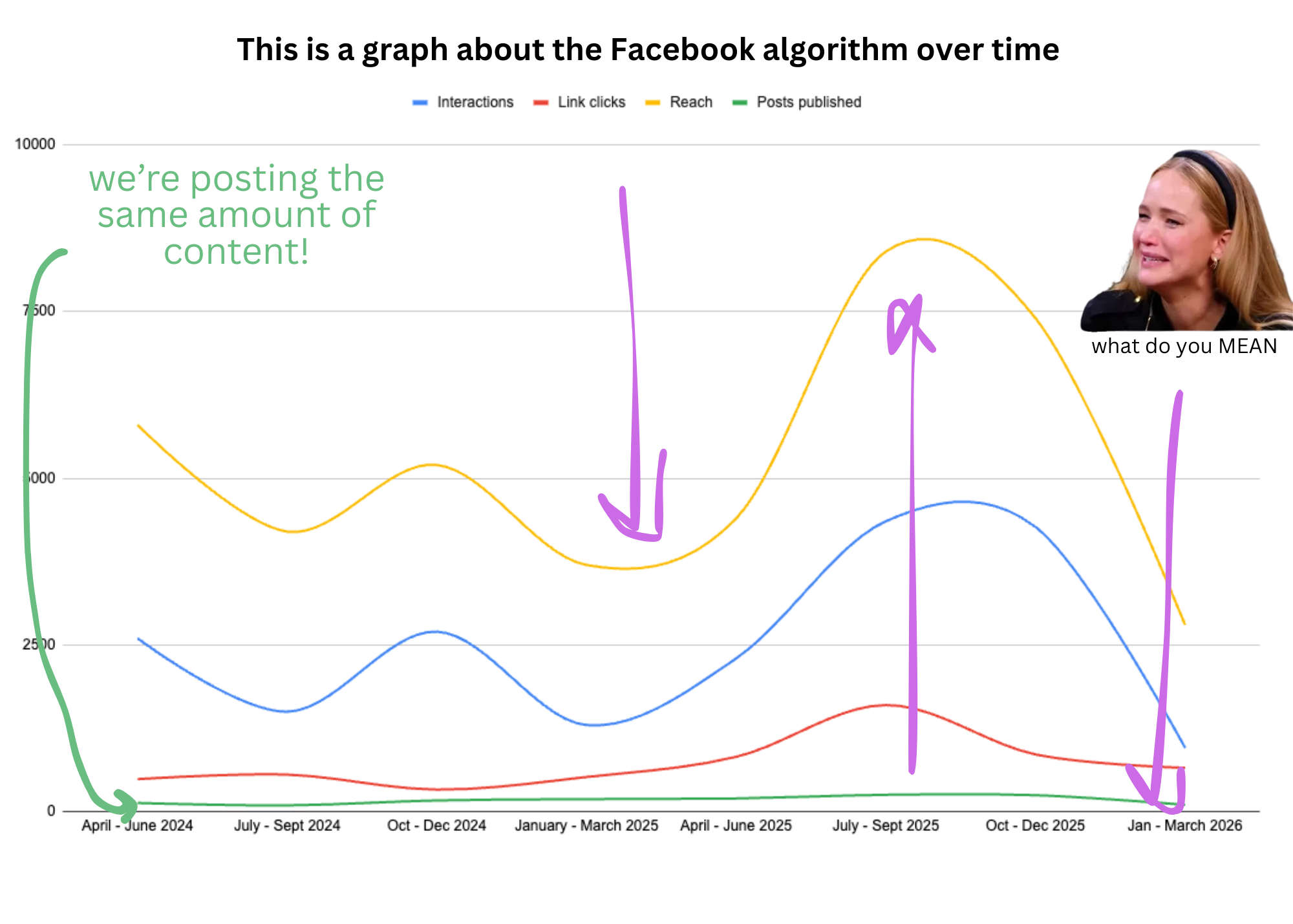
Meta wants us to pay for steady interactions, link clicks and reach. We ain’t gonna do that. So now, this is the unpredictability we’re left with. And I, for one, am tired of it.
A decade ago, if someone followed your page, you could reasonably expect they’d see what you posted. Now? Even people who have liked our pages rarely see our content unless we were to put money behind it. (Which we won’t. Ever.) The whole system has shifted from building a community together to buying attention. At LAAC, we’re all about bringing together a community of people who want to make and create and imagine together.
At the same time, more and more research is pointing to something a lot of people already feel in their heads and hearts: heavy social media use isn’t great for our mental health. Have you seen the news cycle? Of course you have. It’s in our hands every hour of every day. No wonder we’re tired. Worn down. Bone weary. Studies continue to link social media usage to higher rates of anxiety and depression, disrupted sleep, and lower self-esteem, especially for teens and young adults who’ve grown up with it.
And! The design is meant to keep you addicted! Infinite scrolling. Comparison culture. Outrage cycles that go on and on and on. The pressure to be interesting, attractive, informed, funny… all. The. Time. We aren’t built to process a constant stream of tragedy, perfectly curated lives, and conflict that’s been boosted because everyone engages with it.
So it makes sense that people are pulling back. Deleting apps. Setting screen time limits. Turning off notifications.
There is less actual connection and more consumption.
I believe we are at a moment of reckoning with our use of social media. A moment where many of us are quietly asking: Is this working for us anymore?
I think the answer for a lot of us is no.
It’s the answer for a small arts nonprofit in a little town in northern New Mexico. We can’t reach people. No one is engaging. I am burnt out from drafting posts that feel like I’m blowing dandelion seeds in the wind - unsure of where they’ll land.
What feels better to us at LAAC is we are putting more energy into building out our own digital space instead of relying on social media.
When someone visits our website or subscribes to our emails, they’re there on purpose. They’ve already raised their hand and said, “I’m interested!” That’s a very different starting point than trying to catch someone mid-scroll. It’s more reliable, more direct, and frankly more respectful of people’s attention. We control the experience. We decide what gets highlighted, how long it lives, and how it’s presented… not an algorithm. It lets us build something steadier and more sustainable, a space that actually belongs to our community. To us.
Don’t follow us on Facebook, subscribe to our newsletter: https://www.losalamosartscouncil.org/#newsletter